Helping a loved one through a hoarding situation is unlike any other cleanout. It is not really about the stuff. It is about a person who is struggling, a home that may have become unsafe, and a family that loves someone and does not know how to help without causing harm. The clutter is the visible part; the care it requires is the harder part.
This guide is written with that in mind. It walks through hoarding cleanup for Layton and Davis County families in a way that respects the person, keeps everyone safe, and gets the home to a livable, healthy place, with as little damage to trust as possible.
Quick Answer: Approach a hoarding cleanup with the person, not around them. Whenever possible, the individual should be involved in decisions about their belongings, because forcing a fast clear-out can deepen distress and break trust. Address any genuine safety hazards first (blocked exits, biohazards, structural or fire risks), work in stages, and consider professional support, both mental-health help for the underlying condition and an experienced, non-judgmental crew for the physical cleanup and heavy hauling.
Understand What You Are Dealing With
Hoarding is recognized as a mental-health condition, not laziness or a character flaw. The belongings often carry real emotional weight for the person, and the accumulation usually reflects genuine distress. That understanding changes how you approach everything: the goal is to help, not to win an argument about possessions.
Two things follow from this:
- Involve the person. Cleanups done to someone, rather than with them, can cause serious emotional harm and rarely last, because the underlying pattern returns. Whenever the situation allows, the individual should have a voice in what stays and what goes.
- Consider professional mental-health support. The cleanup addresses the symptom. Lasting change usually needs support for the condition itself, through a therapist or counselor experienced with hoarding. A cleared home that fills up again within a year is a sign the underlying need was not addressed.
There are exceptions. When a home poses an immediate danger, safety has to come first, and sometimes decisions must be made quickly. But even then, dignity and communication matter.
Step 1: Address Safety Hazards First
Before general decluttering, deal with anything that makes the home dangerous:
- Blocked exits and pathways. Make sure doors, windows, and hallways can be used in an emergency.
- Fire hazards. Piles near heat sources, overloaded outlets, and heavy accumulation raise fire risk.
- Biohazards. Rotting food, human or animal waste, mold, and pest infestations are health hazards that may need specialized handling and protective equipment.
- Structural concerns. Extreme weight of belongings, water damage, or compromised floors need professional assessment.
- Trip and fall risks, especially for an older adult.
If there are biohazards, serious mold, or waste, this is not a job for bare hands and good intentions. Specialized cleanup professionals have the equipment and training to do it safely.
Step 2: Make a Plan and Go Room by Room
A whole-house hoarding cleanup is overwhelming if you look at it all at once. Break it down:
- Choose one room or even one area to start, ideally one that will make a visible, meaningful difference, like clearing a path to the bathroom or kitchen.
- Set realistic goals for each session. Progress matters more than speed.
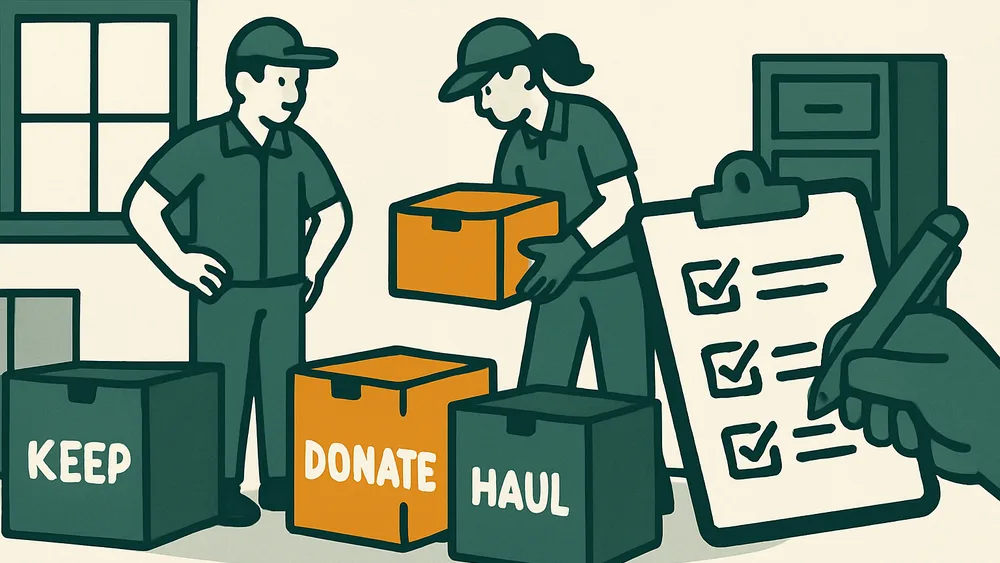
- Use a simple sorting system the person can understand and participate in: keep, donate, recycle, and dispose.
- Expect the pace to be slower than an ordinary cleanout. That is normal and appropriate.
Step 3: Sort With Patience and Respect
This is where the emotional work happens. A few principles help:
- Let the person make decisions wherever possible, even small ones. Agency reduces distress.
- Do not shame or rush. Comments about the mess, however frustrated you feel, damage trust and make cooperation harder.
- Look for valuables and essentials. Important documents, cash, medications, and meaningful items are often mixed into the piles. Do not bulk-toss without checking.
- Take breaks. This is exhausting for everyone. Pace the work.
- Celebrate progress, not perfection.
If you reach an impasse on certain items, it is often better to keep the momentum on the clear decisions than to fight over a few objects.
Step 4: Route Items Correctly
As areas are cleared, direct items to the right place:
- Donate usable goods to Deseret Industries or Habitat for Humanity ReStore.
- Recycle what can be recycled.
- Set hazardous materials aside (old paint, chemicals, batteries) for a household hazardous waste program.
- Handle biohazards through appropriate, specialized disposal.
- Haul away the large volume of genuine trash and unusable items.
Hoarding cleanups typically generate a very large volume of material, far more than a few trips can handle, which is where a hauling crew becomes essential.
Step 5: Bring in Experienced, Non-Judgmental Help
The physical side of a hoarding cleanup, the sheer volume, the heavy items, and sometimes the biohazards, is more than most families can manage alone. An experienced junk removal crew handles the hauling in stages, works at a pace that respects the person and the family, and does the heavy lifting so you can focus on supporting your loved one.
What matters most in choosing help is a non-judgmental approach. The right crew treats the home and the person with respect, works with the family’s plan, and does not add shame to an already hard situation.
GoHaulStrong approaches heavy cleanouts with patience and respect, handling the hauling in stages and working around the decisions the family and their loved one are making. Tell us about the situation when you request your free quote so we can plan the right approach, and flag any biohazards or hazardous materials in advance.
Step 6: Support the Long Term
A cleared home is a milestone, not the finish line. To help it last:
- Encourage ongoing mental-health support for the underlying condition.
- Set up simple, maintainable systems rather than expecting perfection.
- Check in with care, not surveillance.
- Understand that setbacks can happen, and respond with support rather than blame.
When Safety Has to Come First
Most of the time, a hoarding cleanup should move at the person’s pace. But there are situations where safety cannot wait, and it helps to recognize them:
- Blocked exits that would trap someone in a fire.
- Fire hazards from piles near heat sources or overloaded electrical.
- Biohazards such as human or animal waste, rotting food, or heavy pest infestation.
- Structural risk from the weight of belongings or water damage.
- A vulnerable person at risk, such as an older adult who cannot safely move through the home, or a child or dependent in the household.
- A code enforcement or eviction deadline.
In these cases, addressing the hazard takes priority, and decisions may have to be made faster than is ideal. Even then, communicate, preserve dignity, and involve the person as much as the situation allows.
Supporting Yourself as the Helper
Families often overlook this: helping a loved one through a hoarding cleanup is exhausting and emotionally draining for you, too. Pace the work, share it among family members rather than one person carrying it, set boundaries, and do not expect to fix years of accumulation in a weekend. Recognizing your own limits is part of doing this well.
Real-World Scenarios
- An aging parent’s home has quietly filled up. This is common. Lead with care and safety, involve them, and bring in patient help for the volume and heavy items.
- A safety complaint or deadline. When a hazard or an official deadline forces action, prioritize the danger first, then work through the rest with as much of the person’s involvement as possible.
- After a loss. Sometimes hoarding accompanies grief. The cleanup and the emotional support have to go together, and professional counseling helps.
- A cleared home that refilled. If a previous cleanout did not last, that is a sign the underlying condition needs support, not just another clear-out.
- Biohazard present. Waste, mold, or infestation calls for specialized cleanup professionals with the right equipment before general decluttering.
Frequently Asked Questions
Should I clean out a hoarder’s home while they are away?
Generally no. Cleanups done without the person’s involvement can cause serious emotional harm and rarely last, because they do not address the underlying condition. Involve the person whenever possible. The main exception is an immediate safety emergency.
How do I help a family member who is a hoarder?
Lead with compassion, involve them in decisions, address safety hazards first, and encourage professional mental-health support for the underlying condition. For the physical cleanup, bring in experienced, non-judgmental help to handle the volume and heavy lifting.
Is hoarding a mental health condition?
Yes, hoarding is recognized as a mental-health condition, not a matter of laziness. That is why lasting results usually require support for the condition itself, not just a one-time clear-out.
What if the home has biohazards or waste?
Rotting food, waste, mold, and infestations require specialized handling and protective equipment. Do not attempt to clean serious biohazards without the right training and gear; use professionals equipped for it.
How long does a hoarding cleanup take?
It varies widely with the severity and the pace the person can handle. Working room by room in stages is more sustainable than a single overwhelming push, and respects the emotional weight of the process.
Can a junk removal company help with a hoarding cleanup?
Yes. An experienced, respectful crew handles the large volume of hauling in stages, does the heavy lifting, and works around the family’s plan, so you can focus on supporting your loved one. Choose a crew that is patient and non-judgmental.
The Bottom Line
Hoarding cleanup is really about caring for a person, with the clutter as the visible symptom. Involve the individual, address genuine safety hazards first, work in stages with patience and respect, and support the underlying condition for the long term. The physical hauling is heavy work that experienced help can carry.
GoHaulStrong handles heavy cleanouts with patience and care, doing the hauling in stages so your family can focus on your loved one. Get a free quote and tell us about the situation so we can plan the right approach.
Keep Reading
Junk removal near you: GoHaulStrong works across Utah with the patience and discretion a hoarding cleanup needs.
Read next: Estate Cleanout Checklist for Utah Families
Sources Used for Verification
- Mental-health guidance recognizing hoarding disorder and compassionate, person-centered approaches
- Wasatch Integrated Waste Management District disposal and household hazardous waste information
- Biohazard and specialized cleanup safety guidance
- Deseret Industries and Habitat for Humanity ReStore donation guidelines
This article is general guidance, not medical advice. For a loved one struggling with hoarding, seek support from a qualified mental-health professional. Facility and service details change, so confirm current information for your situation.