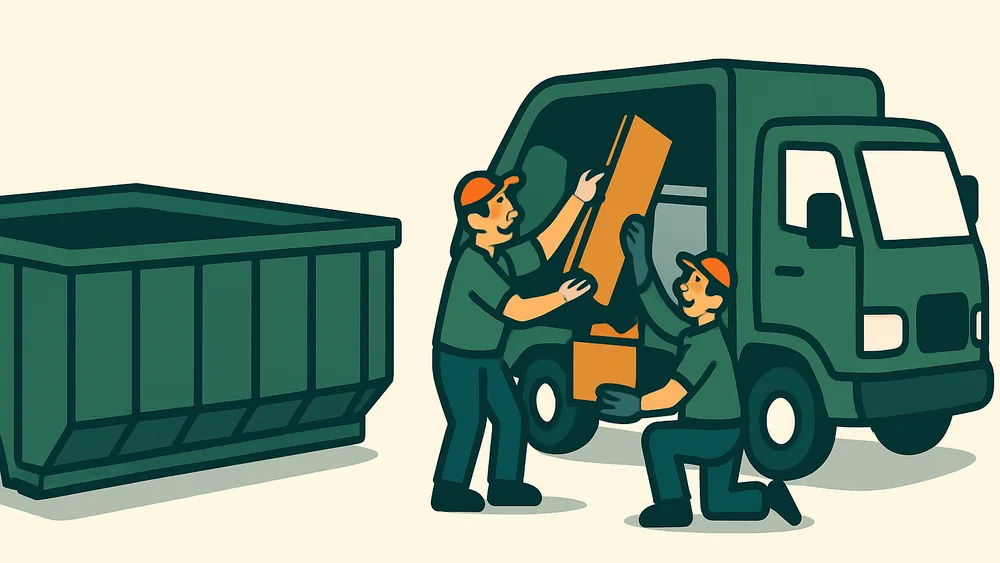
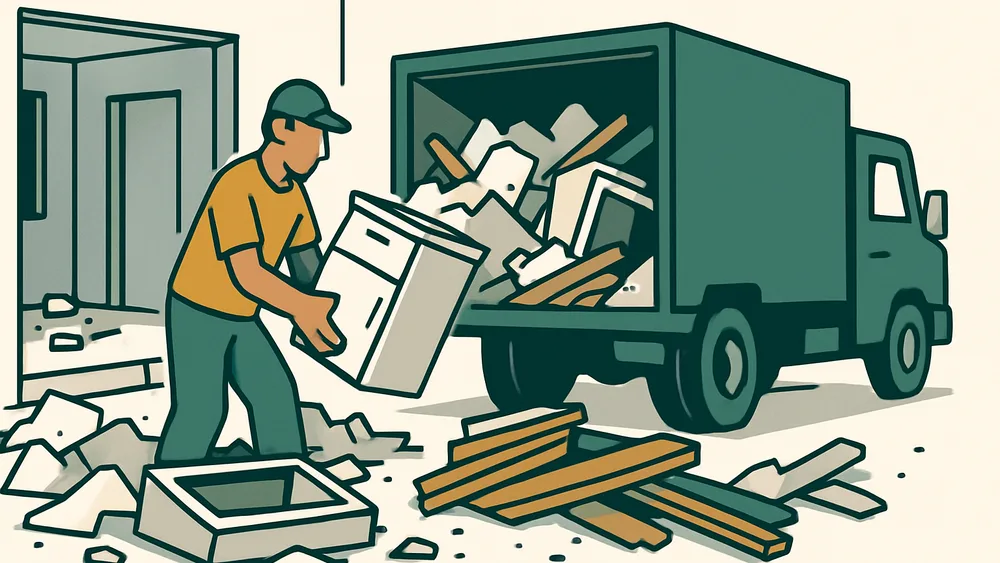
Every renovation ends the same way: with a pile of debris. Torn-out drywall, old flooring, cabinets, trim, broken tile, lumber offcuts, and packaging, all of it heavy, awkward, and far too much for your curbside cart. Whether you are a homeowner who tackled a bathroom yourself or a contractor between phases, that debris has to go somewhere before the project can move forward.
Here is how construction and remodeling debris removal works in Layton and Davis County, what a crew can and cannot take, and how it is priced.
Quick Answer: Construction debris (drywall, wood, flooring, tile, cabinets, fixtures, and similar non-hazardous renovation waste) can be hauled by a junk removal crew or taken to the Wasatch Integrated facility in Layton, which accepts construction and demolition material. It is priced largely by weight and volume because debris is dense and heavy. Certain materials need special handling and are not accepted with ordinary debris, including asbestos, and hazardous items like paint, solvents, and chemicals must be routed separately. Clarify what you have before booking.
What Counts as Construction Debris
Construction and demolition (C&D) debris is the non-hazardous material generated by building, remodeling, and demolition work. Common examples:
- Drywall and plaster
- Lumber, trim, and wood offcuts
- Flooring: carpet, laminate, vinyl, hardwood, tile
- Cabinets, countertops, and fixtures
- Doors and windows
- Roofing material (in many cases)
- Concrete, brick, and masonry (heavy; may be handled separately)
- Insulation (non-hazardous types)
- Packaging and general renovation trash
This is different from household junk because it is dense and heavy. A small pile of drywall and tile can weigh far more than a room full of furniture, which is why debris is usually priced by weight and volume together.
What Crews Cannot Take With Ordinary Debris
Some materials are not accepted with standard C&D debris and need special handling. Always disclose these before a job:
- Asbestos. Older homes may contain asbestos in flooring, insulation, popcorn ceilings, and other materials. Asbestos requires testing and licensed abatement, and it cannot be handled as ordinary debris. If your home predates modern materials and you are disturbing old flooring, ceilings, or insulation, have it assessed first.
- Hazardous materials. Paint, solvents, adhesives, chemicals, and similar products go to a household hazardous waste program, not into a debris load. See our guide on how to dispose of paint in Utah.
- Lead paint debris, contaminated soil, and other regulated materials.
A reputable crew will ask about these. If you are unsure whether a material is regulated, ask before it goes in the pile.
Your Options at a Glance
| Option | Typical Cost | Effort for You | Best For |
|---|---|---|---|
| Junk removal crew | Priced by weight and volume | None | ✓Homeowners, one-time cleanups, no space for a dumpster |
| Roll-off dumpster rental | Rental period plus weight | High (you fill it) | ✓Long projects, ongoing debris |
| DIY transfer-station trips | Per-load disposal fees | High | ✓Small amounts, you have a truck |
Option 1: Junk Removal for Debris
For a homeowner who just finished a project, or a contractor who needs a fast cleanup between phases, a junk removal crew is the simplest option. The crew loads the debris, including the heavy lifting, and hauls it away, so nothing sits on the property and you do not need space for a dumpster.
Junk removal for debris makes sense when:
- The project is done or a phase is complete and you want it cleared now
- You do not have room for a dumpster or do not want one sitting for days
- The debris includes heavy items you do not want to lift and load
- You want a one-time cleanup rather than an ongoing rental
GoHaulStrong removes construction and remodeling debris for homeowners and contractors across Layton and Davis County, doing the loading and hauling. Because debris is heavy, describe what you have (materials and rough amount) when you request your free quote so the price is accurate, and flag anything like asbestos or old paint.
Option 2: Roll-Off Dumpster Rental
For a longer project that generates debris over days or weeks, a rented roll-off dumpster on the driveway may fit better. You fill it at your own pace, and it is hauled when full or when the rental ends. The trade-off is that you do all the loading, the dumpster takes up driveway space, and there are usually weight limits with overage charges. For a comparison of these two approaches, see our guide on dumpster rental versus junk removal.
Option 3: Haul It Yourself
If you have a truck and the debris is modest, you can take it to the Wasatch Integrated facility in Layton, which accepts construction and demolition material. Because debris is heavy, disposal is typically priced by weight, so confirm current rates, hours, and how they want the material sorted. Load carefully, secure it for the drive, and plan for the weight both loading and unloading.
How Construction Debris Removal Is Priced
Debris pricing is different from ordinary junk because weight dominates:
| Factor | Effect on Cost |
|---|---|
| Weight of the material | The biggest driver; concrete, tile, and plaster are very heavy |
| Volume | How much space it fills in the truck |
| Type of material | Some materials cost more to dispose of |
| Access and labor | Stairs, distance to the truck, and loading difficulty |
| Special handling | Regulated materials cost more or need separate routing |
A load of dense material like tile, concrete, or plaster weighs far more than the same volume of wood or drywall, so an accurate description of what you have leads to an accurate quote. Mixed loads are common and fine, as long as regulated materials are kept out.
Debris by Project Type
Different renovations produce very different debris, which affects both weight and cost. A rough guide:
| Project | Typical Debris | Weight Profile |
|---|---|---|
| Bathroom remodel | Tile, tub, vanity, drywall, fixtures | Heavy (tile and cast iron) |
| Kitchen remodel | Cabinets, countertops, flooring, drywall | Mixed, can be heavy with stone tops |
| Flooring replacement | Carpet, laminate, tile, underlayment | Light to heavy depending on material |
| Roofing | Shingles, underlayment, flashing | Very heavy |
| Deck or fence teardown | Lumber, posts, concrete footings | Heavy with concrete |
| Whole-room demo | Drywall, framing, insulation, trim | Mixed, high volume |
Stone countertops, tile, and concrete are dense and drive weight-based cost up quickly, so it helps to call those out when you request a quote.
Real-World Scenarios
- DIY bathroom gut. You tore out the old tile, tub, and vanity over a weekend and now have a heavy pile. A crew loads and hauls it so the new install can start on schedule.
- Contractor between phases. Demo is done and the debris is in the way of the next trade. A same-visit haul keeps the job moving without a dumpster tying up the driveway.
- Flooring swap. Old carpet and pad, or pulled-up laminate and tile, are bulky and awkward. Bundled and hauled in one trip.
- Deck or shed teardown. Lumber plus concrete footings is heavy; note the concrete for an accurate weight-based quote.
- Older home renovation. Before disturbing old flooring, ceilings, or insulation, have suspect materials assessed for asbestos, since that changes the handling entirely.
Frequently Asked Questions
What is considered construction debris?
Non-hazardous renovation and demolition material: drywall, lumber, flooring, tile, cabinets, fixtures, doors, windows, concrete, masonry, and similar. It does not include hazardous materials like paint and solvents, or regulated materials like asbestos.
Can I put renovation debris in my regular trash?
No. Construction debris is too heavy and voluminous for a curbside cart and is not collected with household trash. Use a junk removal crew, a rented dumpster, or a transfer-station drop-off.
Does the Layton facility take construction debris?
The Wasatch Integrated facility in Layton accepts construction and demolition material, typically priced by weight. Confirm current rates, hours, and sorting requirements before you go.
How is construction debris removal priced?
Mostly by weight and volume, because debris is dense and heavy. The type of material and the labor to load it also factor in. Describing what you have accurately gives you an accurate quote.
What about asbestos or old paint?
Asbestos requires testing and licensed abatement and cannot be handled as ordinary debris; in older homes, have suspect flooring, ceilings, or insulation assessed before disturbing them. Paint, solvents, and chemicals go to a household hazardous waste program, not into a debris load.
Should I rent a dumpster or hire a junk removal crew?
A dumpster suits long projects that generate debris over time, where you fill it yourself. Junk removal suits one-time cleanups and cases where you want the debris gone now without lifting it or parking a dumpster for days.
The Bottom Line
Construction debris is heavy, bulky, and cannot go in your regular trash. For a finished project or a phase cleanup, a junk removal crew loads and hauls it in one visit. For an ongoing project, a rented dumpster may fit better. Either way, keep regulated materials like asbestos and hazardous chemicals out of the debris and route them correctly.
GoHaulStrong removes renovation and construction debris for homeowners and contractors, doing the heavy loading and hauling. Get a free quote, describe the materials and amount, and we will give you an accurate price.
Keep Reading
Junk removal near you: GoHaulStrong handles junk removal in Layton and across Davis County, from single loads to full-site debris hauls, with the price quoted up front.
Ready to book? GoHaulStrong handles construction debris removal across Utah, at a flat price with all the lifting done for you.
Read next: Davis County Landfill and Transfer Station: What You Can and Cannot Dump
Sources Used for Verification
- Wasatch Integrated Waste Management District construction and demolition disposal information
- U.S. EPA guidance on construction and demolition debris and asbestos
- Utah asbestos and lead handling requirements
- Household hazardous waste disposal guidance
Disposal rates, acceptance, and regulations change, so confirm current requirements with the facility and applicable authorities before your project.