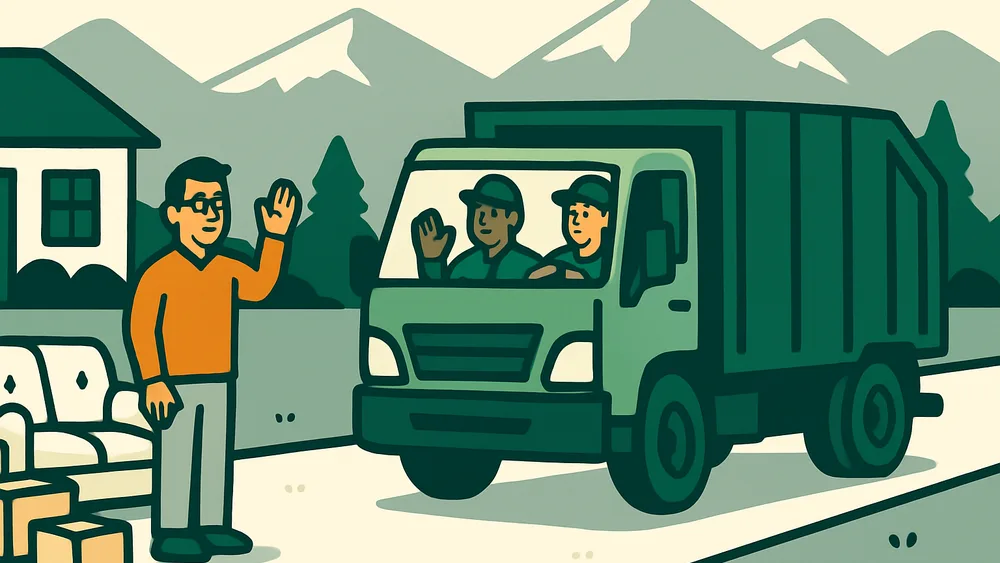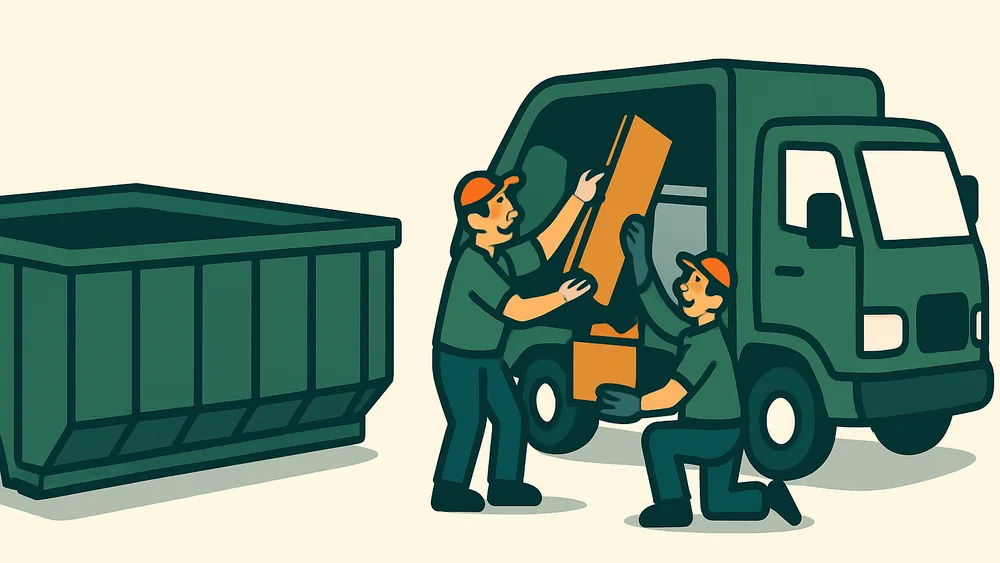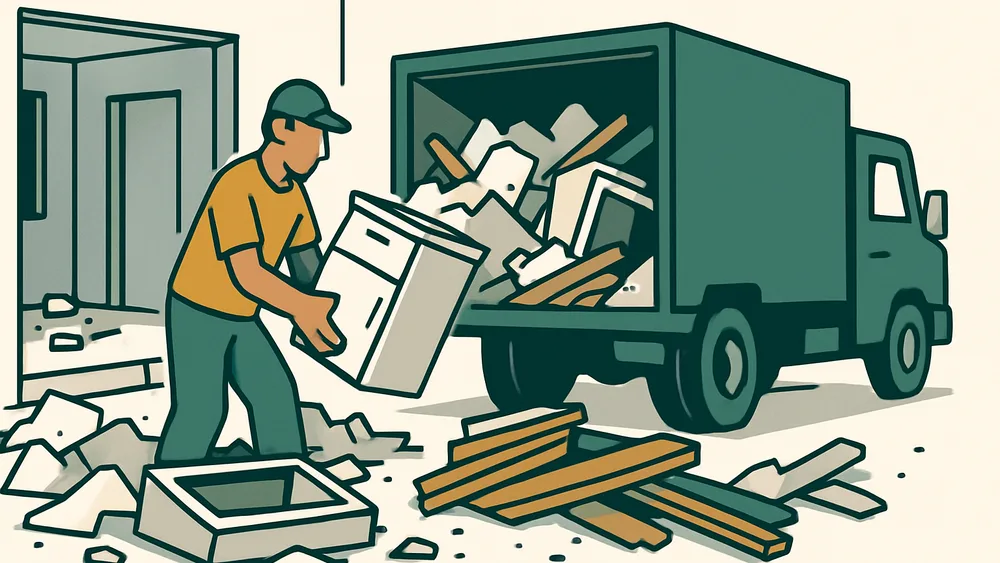
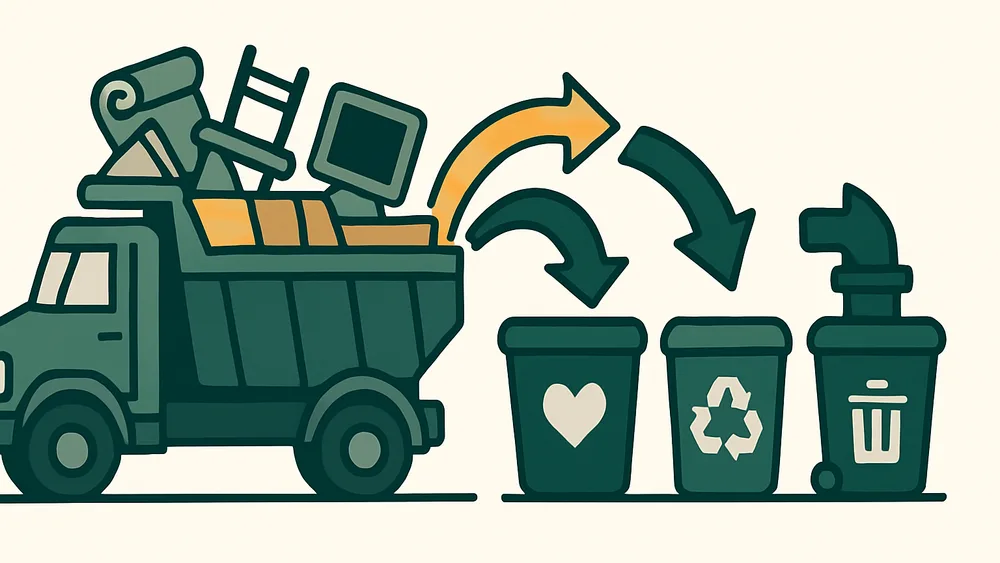
When a crew loads up your old furniture, appliances, and boxes and drives away, it is fair to wonder: where does it actually go? Does it all just get dumped in a landfill, or does some of it get a second life? For a lot of people, this matters. You would rather your usable couch go to a family that needs it than get crushed, and you would rather the metal in your old appliance be recycled than buried.
Here is an honest look at what really happens to your junk after pickup, how responsible crews sort it, and what you can do to help more of it get reused.
Quick Answer: A responsible junk removal crew does not send everything to the landfill. Items are sorted into streams: usable goods are donated, recyclable materials like metal, appliances, and electronics are routed to recyclers, and only what cannot be reused or recycled goes to disposal. How much gets diverted depends on the condition of your items and the company’s practices. You can help by keeping usable items clean and separate and by flagging anything recyclable or hazardous.
The Three Places Your Junk Can Go
Almost everything hauled away ends up in one of three streams:
| Stream | What Goes Here | Outcome |
|---|---|---|
| Donation | Clean, working, usable items | Reused by someone who needs it |
| Recycling | Metal, appliances, electronics, cardboard, some furniture components | Materials recovered and remade |
| Disposal | Broken, soiled, or non-recyclable items | Landfilled responsibly |
A good crew works top to bottom: donate what can be donated, recycle what can be recycled, and dispose of only what is left. The goal is to keep as much as possible out of the landfill, both because it is the right thing to do and because donation and recycling are often the better outcome for the material.
Stream 1: Donation
Usable items are the easiest win. A clean, working couch, a solid dresser, a functioning appliance, or a box of household goods still in good shape can go to a donation center or charity rather than a dump.
In the Layton and Davis County area, that commonly means Deseret Industries, Habitat for Humanity ReStore, and similar organizations. These items get resold affordably or given to people who need them, and the proceeds often support community programs.
What makes an item donatable:
- It works, or is structurally sound and clean
- It is free of heavy stains, damage, odor, and pests
- It is something a household would actually use
This is why the condition of your items matters so much, and why keeping things clean and undamaged before pickup increases the odds they get a second life.
Stream 2: Recycling
A large share of what people call junk is actually recyclable material:
- Metal. Appliances, exercise equipment, metal furniture, and scrap are mostly steel and other metals that recyclers recover. This is one of the most recycled streams.
- Appliances. Refrigerators and freezers have their refrigerant recovered and their metal recycled. Washers, dryers, and ranges are largely metal.
- Electronics. TVs, computers, and devices go to e-waste recyclers that recover metals and handle hazardous components.
- Cardboard and paper. Moving boxes and packaging are readily recyclable.
- Furniture components. Wood frames and metal springs can be separated from upholstery for recycling in some cases.
- Yard debris. Branches and green waste can be composted or mulched rather than landfilled.
Recycling recovers materials so they do not have to be mined or manufactured from scratch, and it keeps heavy, bulky items out of the landfill.
Stream 3: Responsible Disposal
Not everything can be donated or recycled. Broken furniture, soiled mattresses, worn carpet, and mixed non-recyclable material do have to go to a landfill or transfer station. A responsible crew takes this remaining fraction to a proper facility, such as the Wasatch Integrated facility serving Davis and Morgan counties, rather than dumping it illegally.
The honest reality is that some material has reached the end of its life and disposal is the correct outcome. The point of good sorting is to make that fraction as small as it reasonably can be, not to pretend it is zero.
What About Hazardous Materials?
Hazardous materials are a separate stream entirely and are not mixed into ordinary junk. Paint, solvents, chemicals, motor oil, pesticides, and batteries go to a household hazardous waste program, not a landfill or a standard load. This is why crews ask you to flag these items and keep them separate. For paint specifically, see our guide on how to dispose of paint in Utah.
How You Can Help More Get Reused
You have real influence over how much of your junk avoids the landfill:
- Keep usable items clean and dry. A clean couch can be donated; a moldy one cannot.
- Separate the clearly usable from the clearly trash. It helps the crew route things correctly.
- Point out recyclables. Metal, appliances, and electronics.
- Flag hazardous materials. Keep paint, chemicals, and batteries apart so they go to the right place.
- Donate directly when you can. If you have the time and a usable item, taking it to a donation center yourself guarantees its path.
What to Ask a Junk Removal Company
If responsible handling matters to you, it is fair to ask a company directly:
- Do you donate usable items, and where?
- Do you recycle metal, appliances, and electronics?
- How do you handle appliances with refrigerant?
- What do you do with hazardous materials?
A company that takes diversion seriously will answer clearly. GoHaulStrong sorts loads to donate and recycle wherever possible, and routes only what is left to proper disposal. When you get a free quote, tell us about anything usable, recyclable, or hazardous so we can route it correctly.
Item by Item: Where Common Things End Up
To make it concrete, here is the typical fate of the items people most often have hauled:
| Item | Usual Outcome |
|---|---|
| Clean, working couch or dresser | Donated for reuse |
| Worn, torn, or soiled upholstered furniture | Disposal, with metal and wood recovered where possible |
| Refrigerator or freezer | Refrigerant recovered, metal recycled |
| Washer, dryer, range | Metal recycled |
| TV, computer, electronics | E-waste recycler |
| Metal furniture, scrap, exercise equipment | Metal recycled |
| Mattress | Recycled where a program exists, otherwise disposed |
| Cardboard and packaging | Recycled |
| Yard and green waste | Composted or mulched where possible |
| Paint, chemicals, batteries | Household hazardous waste (separate stream) |
| Broken, mixed, non-recyclable items | Responsible disposal |
Why Diversion Is Worth Doing
Keeping usable and recyclable material out of the landfill is not just feel-good. It gives working items a second life for families who need them, recovers metals and materials so they do not have to be mined or manufactured again, and reduces what goes into a landfill that has a finite lifespan. In Davis County, where the Wasatch Integrated district manages disposal for two counties, extending the life of local landfill space has real community value. Good sorting is a small effort with an outsized payoff.
Real-World Scenarios
- A garage cleanout with a mix of everything. The crew separates the donatable tools and furniture, the recyclable metal and appliances, and the true trash, so only the last group is landfilled.
- An estate cleanout. Usable household goods go to donation, which also honors the person, while worn and broken items are disposed of.
- An appliance swap. The old fridge has its refrigerant recovered and its steel recycled, rather than being buried whole.
- A basement full of old electronics. These go to an e-waste recycler, not the landfill, because of both their value and their hazards.
Frequently Asked Questions
Does junk removal just go to the landfill?
Not with a responsible company. Usable items are donated, recyclable materials like metal, appliances, and electronics are recycled, and only what cannot be reused or recycled is disposed of. How much is diverted depends on the condition of the items and the company’s practices.
Where do junk removal companies donate items?
In the Layton and Davis County area, common donation partners include Deseret Industries and Habitat for Humanity ReStore. Clean, working, usable items go to these organizations to be reused.
Is old furniture recyclable?
Partly. Metal frames and springs can be recycled, and some wood can be recovered, but soiled or heavily damaged upholstered furniture often ends up in disposal. Clean, usable furniture is best donated rather than recycled.
What happens to appliances after pickup?
Refrigerators and freezers have their refrigerant recovered and their metal recycled. Other appliances are largely metal and go to scrap recyclers. This keeps heavy appliances out of the landfill.
Do junk removal companies take hazardous waste?
No, not in a standard load. Paint, chemicals, solvents, oil, and batteries go to a household hazardous waste program. Keep these separate and flag them, so they are routed correctly rather than mixed with general junk.
How can I make sure my junk is handled responsibly?
Keep usable items clean, separate the clearly usable from the trash, point out recyclables, flag hazardous materials, and ask the company how it donates and recycles. A company that takes diversion seriously will answer clearly.
The Bottom Line
Your junk does not simply vanish into a landfill, at least not with a crew that sorts responsibly. Usable items are donated, recyclable materials are recovered, and only what is truly at the end of its life is disposed of. The condition of your items and a little sorting on your part make a real difference in how much gets a second life.
GoHaulStrong donates and recycles wherever possible and disposes of the rest responsibly. Get a free quote and tell us what is usable, recyclable, or hazardous so we route it the right way.
Keep Reading
Junk removal near you: See how our crew across northern Utah sorts, donates, and recycles every load.
Read next: Free Junk Removal: Is It Really Free? How It Works
Sources Used for Verification
- Wasatch Integrated Waste Management District disposal and recycling information
- U.S. EPA guidance on recycling, appliance disposal, and waste diversion
- Deseret Industries and Habitat for Humanity ReStore donation guidelines
- Household hazardous waste disposal guidance
Facility practices and acceptance change, so confirm current details with the provider or facility serving your area.